

Did you know that forest management can replicate natural processes?

Updated: Dec 3, 2025

Meet Ron Haas
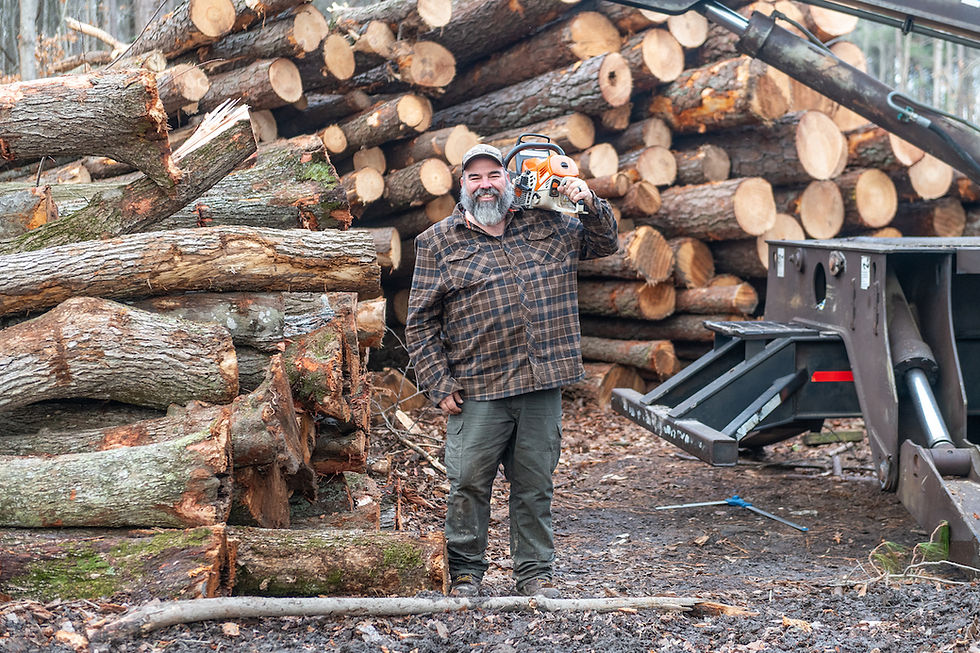
Meet Ron Haas, Project Manager for Delaware Wild Lands’ Great Cypress Swamp – a.k.a. The Swamp. The Swamp is a highly biodiverse landscape of dry uplands and swampy lowlands situated in southern Sussex County (DE) and extending down into Wicomico and Worcester Counties (MD). While much of The Swamp drains to the Delaware Inland Bays, part serves as the headwaters of the Pocomoke River. Ron’s connection to The Swamp spans over 40 years; he claims to have walked every square foot of the 10,000 acres (and I’m inclined to believe him).
At first, to Ron, the forest was simply a place to hunt deer. But over time, his perspective shifted. He traded in his rifle for the challenge of a bow and arrow. He listened to the sounds of the forest and learned about how different organisms interact. He volunteered at The Swamp, removing fallen woody debris from roads and picking up litter. Ron found solace in the forest and grew to love its complexity.
Between 1989 and 1991, Ron experienced firsthand the destructiveness of the southern pine beetle epidemic as it swept through the loblolly pine forests of The Swamp. At that time, Delaware Wild Lands took a hands-off approach to land stewardship. He wondered: Is there anything that could have been done to protect those forests? Ron dove into researching how management can mitigate damage and promote long-term forest health. In 2001, Ron officially joined the Delaware Wild Lands team. He used his new position to advocate for science-based management of The Swamp to enhance game habitat and diversify the landscape.
Ron’s efforts took root, and in 2006, Delaware Wild Lands hired Vision Forestry to develop a timber management plan. The plan, now in its third version, balances Vision’s traditional view of timber management with Delaware Wild Lands’ ecological objectives. The plan breaks down The Swamp into three management types: reserved, natural, and managed. These areas are intended to overlap and adjust as conditions on the land change.
Reserved is land that will remain untouched, allowed to progress without human intervention.
Natural is land that is managed with the objective of restoring pre-colonial conditions.
Managed is land that is managed with the objective of generating revenue through sustainable timber harvesting.
The natural area is where Ron’s passion and depth of knowledge really show. His restoration projects are designed to replicate natural processes. Forest edges are thinned out and underplanted to mimic strong wind events that drop trees and open the forest floor to regeneration. Select trees are girdled to emulate lightning strikes, creating cavities for birds and small mammals to nest in. One natural process that Ron has not yet replicated in The Swamp is fire. Our landscape is adapted to periodic fire – we even have species that depend on the disturbance that fire causes. Ron fears that the continued absence of fire in The Swamp will create conditions conducive to severe wildfire. He reports that there are sections of forest with fuel that would carry fire into the crowns of trees (scary!). The practice of prescribed burning mimics natural fire in a safe and controlled way; it reduces wildfire risk and promotes regeneration. One of Ron’s major goals is to bring fire back to The Swamp.
The shapes of Ron’s restoration projects are organic, following the topography and ecology of the landscape. Lowland areas are managed to maintain shade and standing water to protect habitat for reptiles and amphibians. The iconic baldcypress and Atlantic white-cedar trees are high-priority targets for reforestation. Upland areas are harvested to restore the natural cover type of shrubby oak-pine savannah. Ron studies the land as part of his planning process, taking every feature into account.
Ron’s drive to learn may never slow; he joked that his living room is a library. He shared that the most rewarding part of his work is seeing the plants and wildlife thrive in response to his management decisions. He hopes to get more people engaged with the forest, advocating for expanded outreach as a member of the Maryland Forests Association and Delaware Forestry Association. Although Ron’s relationship with the forest has changed, he hasn’t forgotten that it all began with hunting deer. The Swamp continues to provide quality deer habitat for the private hunt club and research opportunities for deer-focused organizations.
In addition to baldcypress (Taxodium distichum) as his favorite wetland tree and sweetgum (Liquidambar styraciflua) as his favorite for saddle hunting, Ron named his overall favorite tree as the white oak (Quercus alba). We thank him for showing love to Maryland’s state tree!


Ron has graciously led several tours of the Swamp for us, highlighting the land's biodiversity and his deep knowledge and appreciation of the natural world.
Photo Credit: Andrew Martin-DE Wildlands, Director of Social Media & Beth Hill- MFA, Executive Director
Written By: Charly Sager, Natural Resource Planner- Maryland Forest Service
Project Support: Maryland DNR as part of the Delmarva Woodland Stewards Grant

LINKS TO LEARN MORE:
Delaware Wild Lands is a private conservation organization dedicated to protecting and restoring natural habitats. The Great Cypress Swamp is not open to the public, but it does offer occasional informational events and tours. Visit their website or follow them on social media to learn more.
Ron’s most significant source of inspiration is Jerry Franklin, whom he calls “the godfather of ecosystem management.” Franklin’s book, Conserving Forest Biodiversity (co-authored with David Lindenmayer), published in 2002, is Ron’s most cited text.
The National Deer Association's Field to Fork program invites adults outside the traditional hunting culture to learn every aspect of hunting and to source their own protein.
The Delaware Forestry Association functions to support and protect private forest landowners and the forest industry’s right to practice forestry through public policy and educational efforts.
Maryland's Forests- Great for the Environment and the Economy
Why Join MFA?

Click here to learn more about MFA's Faces of Forestry project.
If you are interested in becoming one of our "faces," contact Beth Hill at 410-463-1755



Comments